
The spa and wellness area are the most sensory, personal and difficult-to-standardise spaces in any hotel. They also generate the most polarised reviews on Booking and TripAdvisor. This guide explains how to apply the mystery guest methodology to the spa: which indicators to measure, how to interpret them and which actions have the greatest impact on NPS.
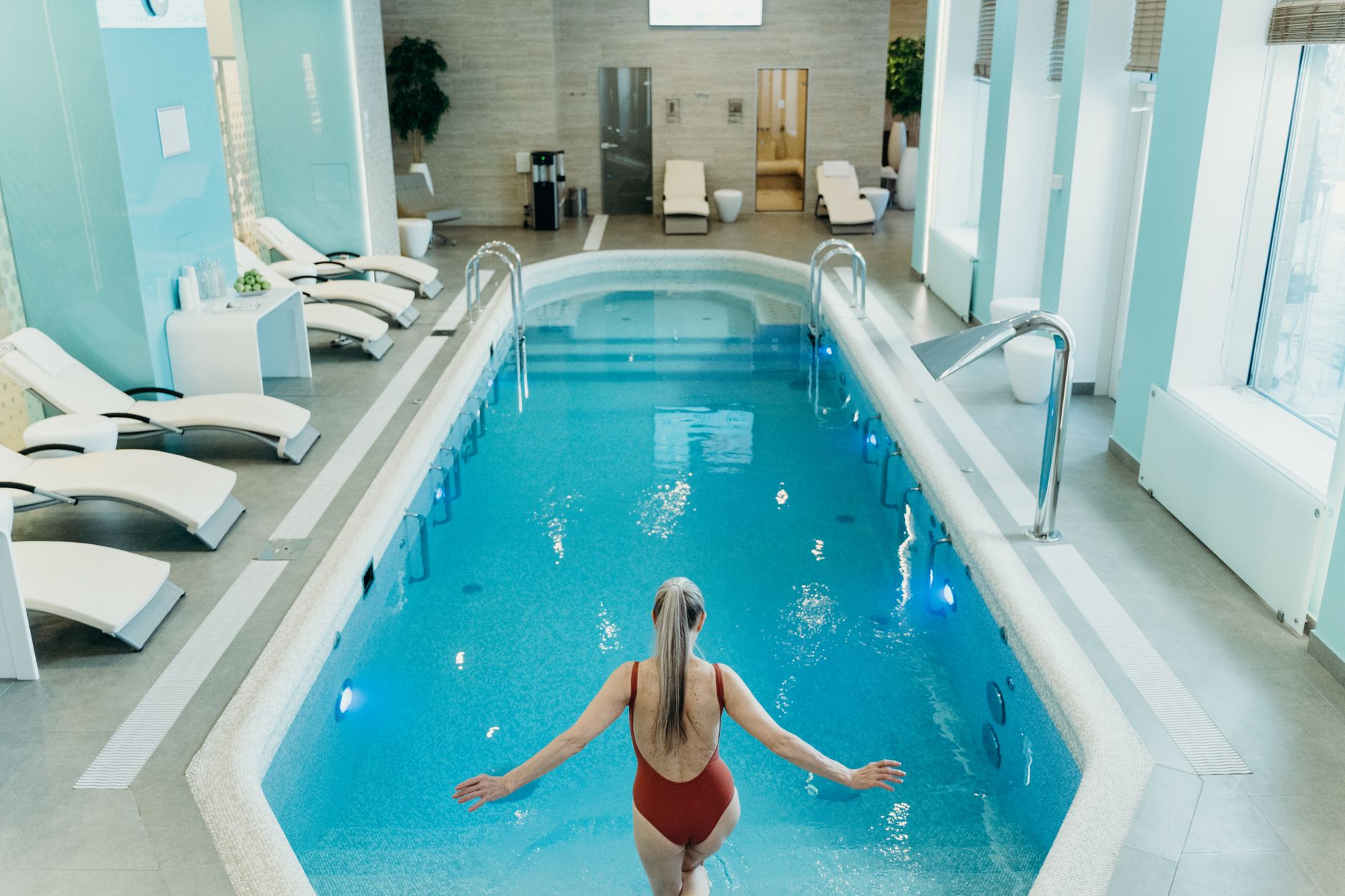
When a guest enters the spa of a 4- or 5-star hotel, they carry expectations shaped by the hotel’s category, the price paid and the photographs seen during booking. Those expectations are high, and the spa experience lasts between 60 and 180 minutes — far longer than any other contact point, except perhaps the overnight stay in the room.
Unlike check-in — which occurs at a single measurable and reproducible moment — the spa accumulates dozens of micro-moments: booking the treatment, the welcome at the spa desk, the changing room, the water circuit, the massage cabin, the therapist, the relaxation room and the departure. Every one of them can ruin or elevate the overall experience.
This explains why negative spa reviews on Booking tend to be the longest and most detailed: the guest invested time, money and emotional expectation. A pool with cold water, a changing room without towels or a therapist who didn’t say hello become the headline of the review.
For hotels whose spa generates more than 10% of revenue from wellness services, a 0.3-point difference in average Booking score can translate into a monthly loss of £4,000–£18,000 in direct bookings, depending on the hotel’s room volume.
A well-designed mystery guest questionnaire for the spa organises indicators into blocks with differentiated weights. The following table reflects the standard most commonly used in 4- and 5-star hotels:
| Block | Main indicators | Weight |
|---|---|---|
| 1. Spa or treatment booking | Ease of booking (web, phone or app), preparation information, confirmation received | 8% |
| 2. Spa desk welcome | Waiting time, greeting by name, facilities briefing, key and towel handover | 12% |
| 3. Changing room and preparation area | Cleanliness, locker availability, temperature, amenities (gel, hairdryer, flip-flops), maintenance | 15% |
| 4. Water circuit and facilities | Pool and jacuzzi water temperature, water and wall cleanliness, sauna and hammam operational, maximum occupancy | 25% |
| 5. Relaxation area | Loungers available, lighting, noise, herbal teas and water available, ambient temperature | 10% |
| 6. Treatment cabin (if applicable) | Therapist punctuality, greeting and health form, massage technique, cabin temperature, farewell and post-treatment recommendations | 20% |
| 7. Closing and departure | Locker return, staff farewell, invitation to return, correct charge if any extra | 10% |
This checklist is used by mystery guest auditors specialised in wellness. Each point is scored 0–10, with a qualitative observation field:
Analysis of more than 200 mystery guest audits in 4- and 5-star hotel spas in Spain, Mexico and Colombia reveals the following benchmarks:
| Block | Average score | % scoring below 6 | Comment |
|---|---|---|---|
| Booking and access | 7.2 / 10 | 18% | The website is usually the weakest point |
| Changing room | 6.8 / 10 | 24% | Broken lockers and lack of towels are the most frequent failures |
| Water circuit | 6.4 / 10 | 31% | The block with the most systematic failures; water temperature is error number 1 |
| Relaxation area | 7.5 / 10 | 12% | Best-performing block; the main risk is capacity management |
| Treatment cabin | 7.9 / 10 | 9% | The therapist is the factor with the highest variance between establishments |
| Closing and departure | 6.6 / 10 | 28% | Impersonal farewell and no invitation to return |
The water circuit is the block with consistently the worst scores. In 31% of the audits analysed, at least one element of the circuit (pool, jacuzzi, sauna or hammam) had incorrect temperature or was malfunctioning at the time of the visit. This is not an investment problem — most of these hotels have modern equipment — but a maintenance protocol and daily control issue.
These are the five failures that appear most frequently in mystery guest spa audit reports:
The mystery guest spa report is the raw material for a concrete action plan. The recommended process is:
Mystery guest spa audit prices vary depending on whether they include only the facilities or also a treatment cabin:
| Audit type | Estimated cost | Visit duration | Best for |
|---|---|---|---|
| Facilities only (water circuit + changing room + relaxation) | €350 – €500 | 90–120 min | First analysis or quick follow-up |
| Facilities + 60-minute massage | €550 – €800 | 150–180 min | Full evaluation; treatment cost included |
| Facilities + facial or specialist cabin treatment | €700 – €950 | 150–210 min | 5-star hotels or med-aesthetic spas |
| Annual programme (4 visits, facilities + massage) | €1,800 – €2,800 | Per contract | Hotel chains or hotels with quality certification |
Recommended frequency by category:
The greatest efficiency is achieved when the spa audit is not a standalone action but part of the hotel’s overall mystery guest programme. This delivers three operational advantages:
Consistency of indicators: if the hotel mystery guest scores front-desk friendliness at 8.5 but the spa scores 5.2, the integrated report shows that the problem is department-specific and not a hotel-wide culture issue. Without the combined view, the director might incorrectly conclude that the problem is global.
Cost savings: the evaluator can visit the spa during the same stay that audits the reception, restaurant and room. The incremental cost of adding the spa to an already-scheduled visit is 30–40% lower than commissioning an independent spa visit.
Complete journey view: guests do not separate "the hotel experience" from "the spa experience". If check-in was perfect but the jacuzzi water was cold, the overall score will fall. The integrated report allows improvement investments to be prioritised with a complete view of the guest’s journey.
Revenue management teams at 5-star hotels that have integrated the spa audit into their mystery guest programme report an average improvement of 0.4 points in their Booking score over the following 6 months, which in an 80-room hotel can represent £7,000–£22,000 in additional annual revPAR.
The front desk is audited at a single measurable moment (check-in), whereas the spa involves a 60–120-minute experience with multiple micro-moments: pre-booking, spa desk welcome, changing room, water circuit, treatment cabin and departure. Each is scored separately, making the spa report longer and more detailed than a reception audit.
In Europe, a mystery guest spa audit ranges from €350–€900 per visit depending on whether a cabin treatment (massage, facial) is included or only the facilities. A quarterly programme of 4 annual visits is typically negotiated at €1,000–€2,800 total. The cost of the consumed treatment is included in most quotes.
Analysis of more than 200 mystery guest audits in 4- and 5-star hotel spas shows that pool and jacuzzi water cleanliness and temperature has the highest correlation with Booking scores: dirty or cold water generates 38% of negative spa reviews, far ahead of staff treatment (22%) or treatment price (15%).
Yes. Many spa audit protocols split into two types: facilities visit (pool, sauna, hammam, jacuzzi, relaxation area) and treatment visit (massage or facial cabin). The facilities visit is less expensive and evaluates 60% of contact points. If the spa has low Booking scores without a clear cause, starting with the facilities visit before auditing cabins is usually recommended.
The recommended frequency for 4-star hotels is 2 visits per year (high and low season). For 5-star hotels or those with high spa RevPAR dependency (spas generating more than 15% of hotel revenue), a quarterly visit is recommended. Hotels pursuing quality certification (Thalasso Quality, Leading Hotels of the World) typically require 4–6 visits annually.
Not exactly. In a hotel spa, the evaluator is a guest who already has access included in their rate or books it at reception. At a day spa, the evaluator enters as an external client and the welcome protocol differs (payment verification, facilities briefing, access wristband). The questionnaire shares about 70% of indicators but the weights and benchmarks differ.