
Professional guide to the 8 factors that define the diner experience in a restaurant. With a by-segment comparison table, how to measure each factor precisely and 9 frequently asked questions. 2026 data.
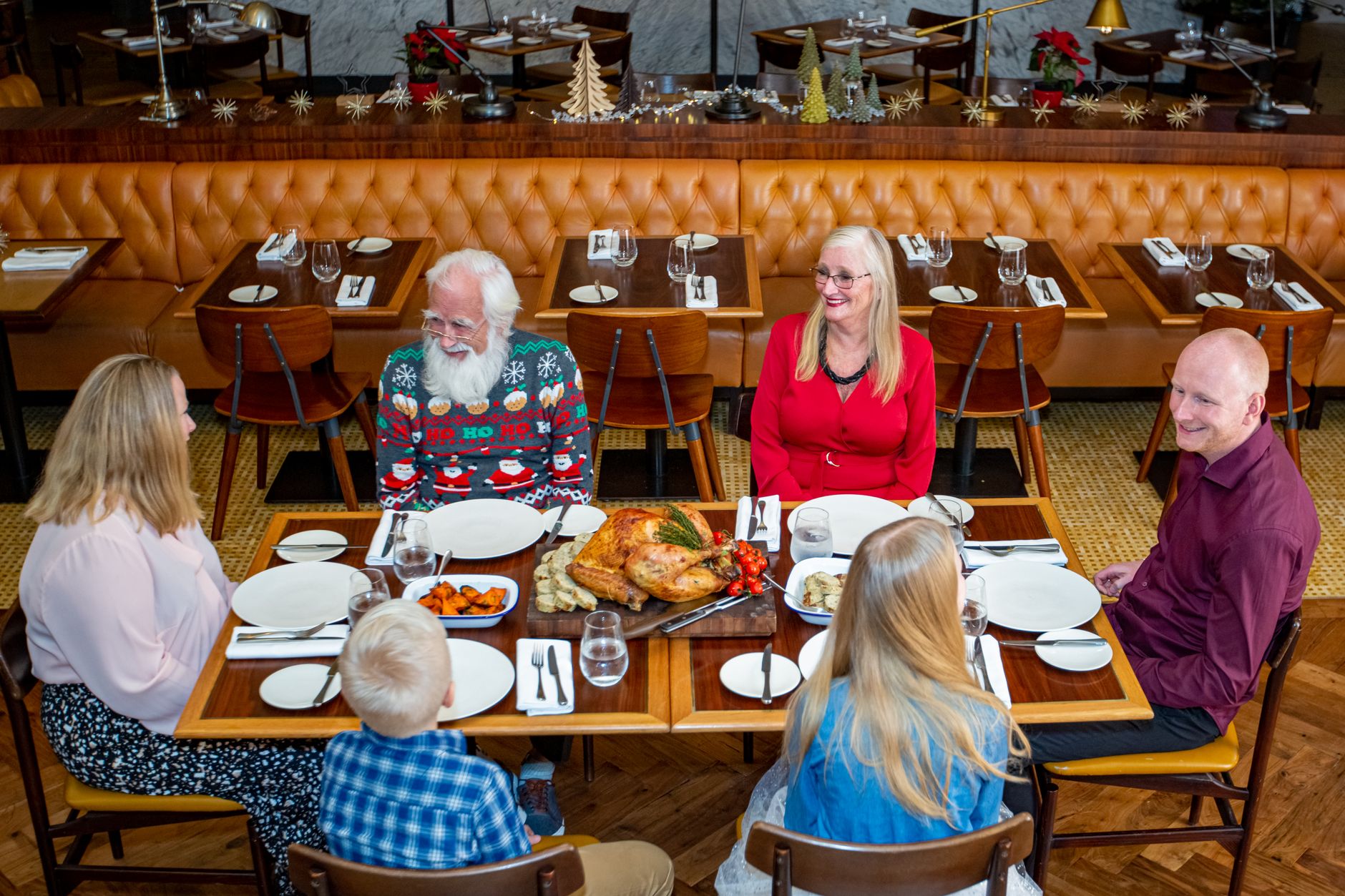
The diner experience encompasses everything a guest perceives during a restaurant visit, from the moment they search for the venue online to the moment they walk out the door. In 2026, hospitality research consistently shows that guests evaluate their visit holistically — not as a collection of separate moments — meaning that a single weak touchpoint can override an otherwise excellent visit in the diner's memory and their review.
This holistic evaluation is why restaurants that focus exclusively on food quality while neglecting service, timing or hygiene consistently underperform in online ratings relative to their food quality. A 2026 analysis of HORECA online reviews found that 71% of negative reviews for restaurants with objectively high-quality food cited service, waiting times or atmosphere as the primary reason for the low score — not the food itself.
Understanding the diner experience in detail — what its components are, how they weight differently across restaurant segments and how to measure them objectively — is the foundation of any mystery diner programme and any sustainable restaurant improvement initiative.

The foundation of the diner experience — always ranked first across all demographics and formats. But "quality" in 2026 has expanded beyond taste: diners now evaluate freshness, ingredient provenance, allergen accuracy, portion consistency and presentation. A restaurant scoring high on flavour but failing on allergen communication or portion inconsistency will receive negative reviews from a growing share of its guests.
Diners distinguish clearly between technical competence (order accuracy, timing, product knowledge) and genuine warmth (eye contact, proactivity, remembering preferences). Staff who only respond when called score consistently lower than those who anticipate needs. This is the factor most influenced by training and culture — and most clearly revealed in a mystery diner audit, which evaluates staff behaviour in natural, unmonitored conditions.
Time perception is one of the most powerful drivers of the diner experience. In casual dining, exceeding 5 minutes to take an order after seating generates documented discomfort. In fast casual, the threshold is even lower. The key insight: it is not always the actual time that matters but the perceived time. A server who acknowledges the table within 2 minutes — even if they cannot take the order immediately — resets the wait perception and reduces measured dissatisfaction by up to 40%. See our full guide on restaurant service time benchmarks.
Hygiene functions as a disqualifier: any visible issue — sticky tables, dirty napkins, poorly maintained restrooms — penalises the entire experience regardless of food quality. Restrooms are the most critical indicator because they are the best accessible proxy for kitchen cleanliness. A mystery diner always marks restroom condition as a priority checkpoint regardless of the overall audit focus.
Lighting, temperature, noise level and interior design act as experience multipliers. Good atmosphere reinforces perceived food and service quality; poor atmosphere (excessively noisy, uncomfortable temperature, poor lighting) penalises them even when everything else is excellent. Restaurants with acoustically designed spaces consistently score 10-15% higher in post-visit satisfaction research — a gap that is rarely attributed by guests to the acoustics themselves, but always shows up in the overall score.
Price is rarely the top complaint — value is. Diners are willing to pay more when the experience justifies it. What they resent is paying average market prices for a below-average experience. In mystery diner audits, value perception is evaluated by comparing menu promises (price point, product description, category) against what the diner actually receives in terms of portion size, ingredient quality and service level.
EU Regulation 1169/2011 requires allergen information to be available for all 14 major allergen groups in restaurants operating in EU markets. Beyond compliance, clear allergen communication has become a baseline expectation in 2026 — not a differentiator. Restaurants where staff cannot answer allergen questions without checking the kitchen receive a critical fail in professional mystery diner questionnaires, regardless of the overall score on other factors.
The experience starts before the diner enters and ends after they leave. Ease of online booking, quality of the booking confirmation, greeting at the door, speed to the assigned table, speed to receive the bill after requesting it, and the quality of the farewell all contribute to the diner's overall perception — even though many restaurants invest little attention in these "bookend" touchpoints. Optimising the arrival and exit experience is consistently one of the highest-ROI improvements identified in mystery diner audits.

| Factor | Fast food | Casual dining | Mid-range a la carte | Fine dining |
|---|---|---|---|---|
| Food quality | High | Very high | Very high | Critical |
| Service attentiveness | Low | High | Very high | Critical |
| Service timing | Critical | High | Medium | Low |
| Cleanliness | Critical | Very high | Very high | Critical |
| Atmosphere | Low | High | High | Critical |
| Perceived value | High | High | Very high | Medium |
| Allergen communication | Medium | High | High | Very high |
| Arrival / exit experience | Low | Medium | High | Critical |
Three primary tools are used to measure the diner experience — each with distinct strengths:
The most effective restaurant improvement programmes use all three: mystery diner for operational diagnostics, NPS for tracking trend direction and identifying if changes are working, and review analysis for public reputation management and theme identification at scale.
A mystery diner is an anonymous evaluator who visits a restaurant as a normal guest and records every component of the diner experience using a structured questionnaire and field app. Unlike surveys and reviews, mystery diner data is:
For multi-site restaurant groups, mystery diner programmes are the most cost-efficient way to maintain consistent standards across locations and to identify which sites need targeted intervention before issues show up in online review scores — typically with a 3–6 month lag.